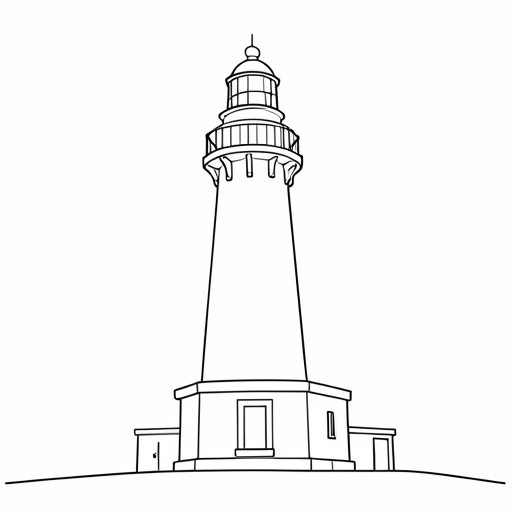
Why a photo they took beats a stock drawing
Recognition does most of the teaching. A child colouring the lighthouse they stood next to last Tuesday is revisiting the trip, not filling in a shape. The drawing is a prompt for a memory that already exists.
That is the whole argument for converting your own photos rather than only browsing a library, and it is why the feature exists at all.
What converts well
The conversion is looking for edges it can turn into closed shapes.
- One clear subject that fills a good part of the frame.
- A background that is plain, or at least much less busy than the subject.
- Daylight, or bright even indoor light. Flat light is better than dramatic light here.
- Solid objects with real outlines: pets, buildings, vehicles, toys, instruments.
What needs a retake
Backlight is the most common failure. If the subject is a silhouette against a bright window, there are no interior edges to trace, and the result is a blob.
Fine texture is the second. A close-up of fur, grass or fabric produces hundreds of tiny lines, which reads as noise on paper rather than as shapes to colour.
Shooting for the converter
If you know in advance that a photo is destined for a sheet, take it against a wall rather than against a scene, stand close enough that the subject fills the frame, and shoot with the light behind you.
Thirty seconds of framing saves a conversion and produces a far better sheet.